

 Introduction
Vibratory finishing is a mechanical surface-finishing process used to improve the surface quality, appearance, and functionality of manufactured components. It is widely used in industries such as automotive, aerospace, medical equipment, jewellery, electronics, and general engineering. The process involves placing components inside a vibrating machine along with abrasive media, water, and sometimes chemical compounds. The continuous vibration causes the components and media to move against each other, gradually removing unwanted material from the component's surface.
The main purpose of vibratory finishing is to remove sharp edges, burrs, surface imperfections, and machining marks while producing a smooth and uniform finish. It is also used for cleaning, polishing, radiusing edges, and preparing components for further operations such as painting, plating, or coating.
1. Working Principle of Vibratory Finishing
Vibratory finishing works on the principle of controlled friction and abrasion. The machine generates vibrations through an electric motor connected to an eccentric weight or an unbalanced rotating mechanism.
When the machine is switched on, the vibrating action causes the finishing bowl or tub to move in a circular or elliptical motion. This movement creates a continuous flow of abrasive media and components inside the machine.
As the media rubs against the component surfaces, small amounts of material are gradually removed. This action helps eliminate burrs, smooth rough surfaces, and improve the overall appearance of the components.
The finishing process generally involves four main elements:
- Vibratory machine: Produces the vibration required for the finishing operation.
- Abrasive media: Creates friction and removes unwanted material from the component.
- Compound: A liquid or powder added to improve cleaning, lubrication, and finishing performance.
- Workpieces: The components that require deburring, polishing, or surface improvement.
The combination of these elements determines the quality and effectiveness of the finishing process.
Latem has large and small machines permitting us to run both large and small parts, as well as large and small volumes. We have a multitude of different media shapes, sizes and base materials to offer. As well, we mix our own compounds in house, using our 50 years of knowledge to ensure we are giving you the best product at a competitive price.
2. Types of Abrasive Media
Abrasive media plays an important role in vibratory finishing because it directly influences the amount of material removed and the final surface quality.
Different types of media are selected depending on the material, shape, size, and finishing requirements of the workpiece.
The commonly used media include:
- Ceramic media: Used for aggressive cutting, deburring, and removing heavy machining marks. It is suitable for hard metals such as steel and stainless steel.
- Plastic media: Provides a softer finishing action and is commonly used for aluminium, zinc, and other softer metals.
- Porcelain media: Mainly used for fine finishing and polishing applications.
- Steel media: Used for burnishing and improving surface smoothness and brightness without significant material removal.
- Organic media: Materials such as corn cob and walnut shells are used for gentle polishing and drying applications.
Selecting the correct media is essential because unsuitable media may damage the component or produce an unsatisfactory surface finish.
3. Process of Vibratory Finishing
The vibratory finishing process generally follows a series of steps.
Step 1: Loading the components
The workpieces are placed inside the vibratory finishing machine. The loading quantity should be controlled to ensure proper movement and prevent excessive contact between components.
Step 2: Adding abrasive media
Suitable abrasive media is added to the machine. The media-to-component ratio depends on the size, shape, and finishing requirements of the workpieces.
Step 3: Adding water and compound
Water and finishing compounds are introduced to improve the process. These compounds help remove dirt, oil, and metal particles while reducing friction and preventing corrosion.
Step 4: Starting the machine
The machine is switched on, producing vibrations that move the media and components continuously. The rubbing action gradually removes burrs and surface irregularities.
Step 5: Finishing and inspection
After the required processing time, the machine is stopped and the components are separated from the media. They are then cleaned, dried, and inspected to ensure the required surface finish has been achieved. Once Latem has determined a process to your approval, that process is kept in our computer system giving us repeatability year after year.
4. Applications of Vibratory Finishing
Vibratory finishing is used in various manufacturing industries because it can process large quantities of components consistently.
Some important applications include:
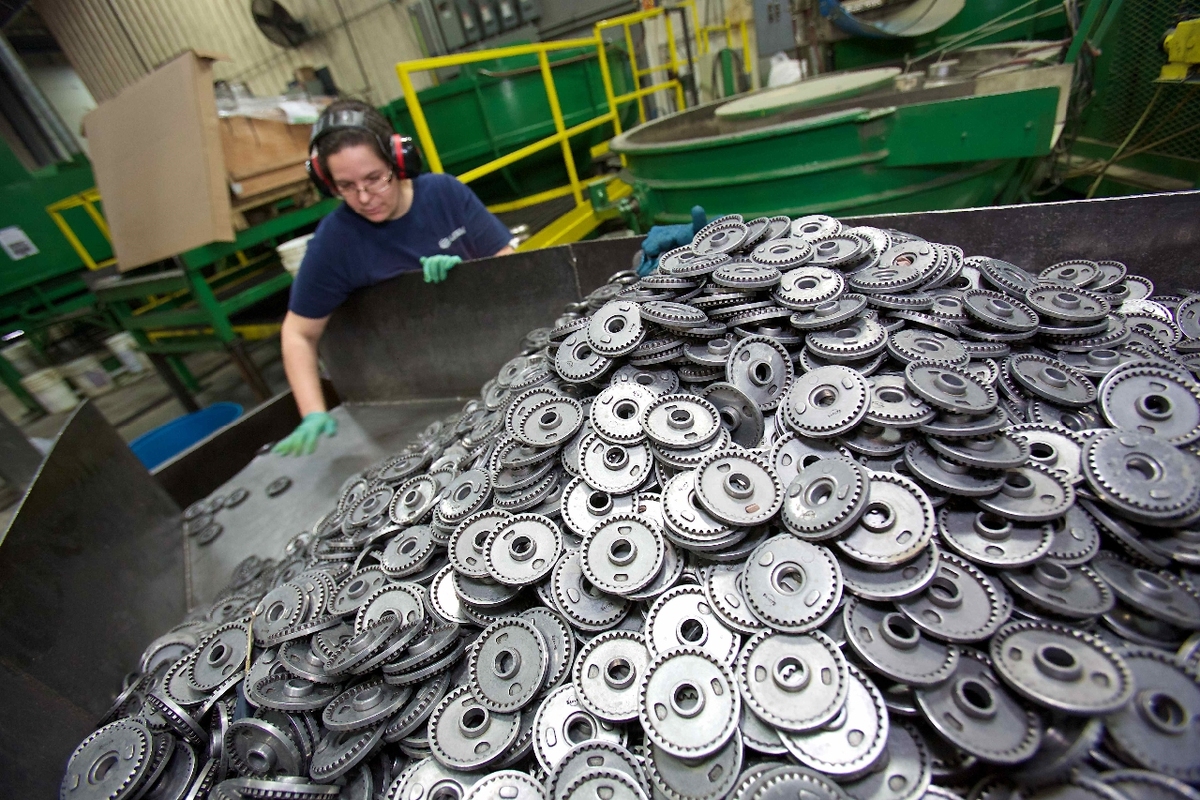
- Automotive industry: Deburring gears, engine components, brackets, and transmission parts.
- Aerospace industry: Finishing precision-machined components and removing sharp edges.
- Medical industry: Improving the surface quality of surgical instruments and medical components.
- Jewellery industry: Polishing metal ornaments and improving their appearance.
- Electronics industry: Finishing small metal parts, connectors, and precision components.
- General manufacturing: Removing burrs, cleaning castings, and preparing components for coating or plating.
Latem has or is currently dealing in each of the industries above, as well as agriculture and furniture.
5. Advantages of Vibratory Finishing
Vibratory finishing offers several advantages over manual finishing and other conventional surface-treatment methods.
- High productivity: Multiple components can be processed simultaneously, reducing manual labour and processing time.
- Uniform finishing: It provides consistent surface quality when the machine parameters are properly controlled.
- Reduced labour cost: Automated operation reduces the need for manual grinding and polishing.
- Improved safety: It reduces direct operator contact with sharp edges and abrasive tools.
- Versatility: Different media and compounds can be used for various materials and finishing requirements.
- Better component quality: It removes burrs and sharp edges, improving the appearance and usability of components.
6. Important Parameters Affecting the Process
The quality of vibratory finishing depends on several operating parameters:
- Vibration frequency: Determines how frequently the machine moves and influences the finishing action.
- Amplitude: Refers to the displacement of the vibrating bowl or tub.
- Processing time: Longer processing generally produces a finer finish, although excessive processing may damage components.
- Media selection: Determines the cutting strength and final surface appearance.
- Media-to-component ratio: Influences contact between the media and workpieces.
- Compound concentration: Affects cleaning, lubrication, and surface quality.
Proper control of these parameters is necessary to achieve the desired finishing results. Latem Industries has 50 years of experience in metal finishing, including vibratory finishing. We take all of these parameters in consideration when determining a process for you.
Conclusion
Vibratory finishing is an important surface-treatment process in modern manufacturing. It uses controlled vibration, abrasive media, and finishing compounds to remove burrs, smooth surfaces, clean components, and improve their appearance. Its ability to process several components simultaneously makes it an economical and efficient alternative to manual finishing methods.
Although the process has certain limitations, selecting the correct media, controlling operating parameters, and maintaining the machine can produce consistent and high-quality results. Overall, vibratory finishing plays a significant role in improving product quality, reducing manufacturing costs, and ensuring that finished components meet industrial requirements.
Contact us to learn more about our Vibratory Finishing services.


