

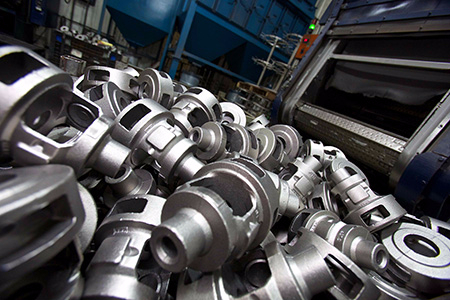
 Mass finishing is a crucial process in the metal industry used to improve the surface quality of metal parts on a large scale. It involves the simultaneous treatment of multiple parts using mechanical energy, media, and sometimes compounds, to achieve specific surface characteristics. Whether it's to deburr, polish, descale, clean, or prepare for coating, mass finishing ensures efficiency, consistency, and cost-effectiveness in post-production operations.
What is Mass Finishing?
Mass finishing refers to a group of processes where a large batch of metal parts is finished at the same time without manual intervention on each individual component. These processes utilize equipment that agitates the parts together with abrasive media and, often, liquid compounds to remove imperfections and enhance surface properties.
The most common mass finishing techniques include:
- Vibratory Finishing
- Tumbling (or Barrel Finishing)
- Centrifugal Finishing
Each method serves slightly different purposes and is selected based on part geometry, desired finish, production volume, and tolerance sensitivity.
Key Functions of Mass Finishing
- Deburring - After machining or stamping, parts often have sharp edges or small projections known as burrs. Deburring through mass finishing smooths out these imperfections, improving both safety and fit.
- Edge Radiusing - Mass finishing can also round off sharp edges to improve wear resistance, coating adhesion, and functionality, especially in moving parts.
- Cleaning and Degreasing - Mass finishing removes oils, greases, rust, or scale left from earlier processes. Cleaning is essential for subsequent coating, plating, or assembly.
- Descaling and Rust Removal - Oxides and scale layers from heat treatment or welding can be removed, leaving a cleaner and more uniform metal surface.
- Polishing and Burnishing - To achieve a bright or mirror-like finish, mass finishing can polish metal surfaces. Burnishing, in particular, uses non-abrasive media and high pressure to compact the surface, enhancing luster and hardness.
- Surface Preparation - Mass finishing is often a pretreatment before powder coating, electroplating, anodizing, or painting. A consistent surface ensures better adhesion and long-term performance of finishes.
Common Equipment Types
Vibratory Finishers
These machines use a vibrating motion to move parts and media together. Vibratory finishers are gentle and ideal for delicate or complex parts that could be damaged by more aggressive methods.
Tumbling or Barrel Finishers
Rotating barrels tumble parts with media, producing a more aggressive action than vibratory machines. This method is effective for heavy deburring or rust removal but may cause part-on-part contact.
Centrifugal Disc and Barrel Finishers
These machines use centrifugal force to increase pressure and speed, resulting in faster and more efficient finishing. They are ideal for small precision parts requiring fine finishing.
Media and Compounds
The abrasive media used in mass finishing comes in various shapes, sizes, and materials, including:
- Ceramic Media: Durable and suitable for heavy deburring.
- Plastic Media: Lightweight and ideal for soft metals.
- Steel Media: Used for burnishing and polishing without abrasion.
- Organic Media: Like walnut shells or corn cob, used in fine polishing or drying.
Compounds are added to control pH, prevent rust, lubricate, clean, or enhance the finishing process. The right combination of media and compound is critical to achieving the desired result.
Benefits of Mass Finishing in Metalworking
- Scalability - Mass finishing can process hundreds or thousands of parts in a single cycle, making it ideal for high-volume manufacturing.
- Consistency - The mechanical nature of mass finishing ensures each part is treated uniformly, improving quality control and reducing human error.
- Cost Efficiency - It eliminates the need for labor-intensive manual finishing, lowers operational costs, and reduces rework.
- Versatility - Whether preparing a part for coating, removing defects, or enhancing aesthetics, mass finishing serves a wide range of applications across automotive, aerospace, medical, and general manufacturing sectors.
- Improved Performance - By removing burrs and sharp edges, mass finishing enhances part functionality, safety, and longevity.
Considerations and Limitations
Despite its advantages, mass finishing is not suitable for all applications. Complex internal geometries or tight tolerances may require alternative methods or special fixturing. Parts with thin walls or delicate features can also be damaged if the wrong process is selected.
Environmental concerns also arise from the use of water and chemical compounds, requiring proper waste management and recycling practices to remain compliant with regulations.
Conclusion
Mass finishing is a cornerstone of metal finishing operations, offering a highly effective means of improving surface quality, part performance, and production efficiency. By understanding the different techniques, media, and applications, manufacturers can optimize their finishing processes and maintain high standards in metal product quality.
In a competitive manufacturing environment, adopting the right mass finishing strategy can be the difference between a good part and a great one.
Latem Industries Limited has been mass finishing parts for close to 50 years and is one of the largest mass finishing companies in North America. Give us a chance to assist you with your metal finishing needs.