

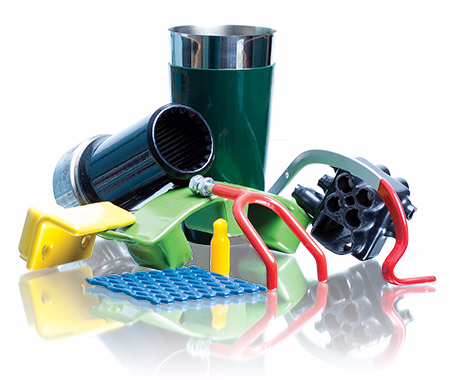
 Pretreatment is an essential process in both electrostatic coating and powder coating because it prepares the metal surface to achieve strong adhesion, corrosion resistance, durability, and a high-quality finish. Without proper pretreatment, even the best coating materials cannot provide long-lasting protection or an attractive appearance. Pretreatment removes contaminants, creates a suitable surface for coating adhesion, and enhances the overall performance of the coated product. Industries such as automotive, construction, appliances, furniture, and engineering rely heavily on effective pretreatment to ensure the success of electrostatic and powder coating operations.
The primary purpose of pretreatment is to clean the surface thoroughly. Metal components often contain contaminants such as oil, grease, dirt, rust, dust, welding residues, and oxide layers formed during manufacturing or storage. These impurities prevent the coating from bonding directly to the metal surface. If contaminants remain, the coating may peel, blister, crack, or develop bubbles after curing. Therefore, pretreatment begins with cleaning processes such as degreasing, alkaline cleaning, or solvent cleaning to remove unwanted substances completely.
Another important objective of pretreatment is to improve coating adhesion. Electrostatic coating and powder coating depend on strong bonding between the coating particles and the substrate. Pretreatment creates a chemically active and slightly rough surface that allows the coating to grip firmly. Mechanical methods such as abrasive blasting or chemical methods like phosphating and chromating modify the metal surface, increasing its surface energy and improving the mechanical and chemical bond between the coating and the substrate. Better adhesion reduces the risk of coating failure during service.
Pretreatment also provides excellent corrosion resistance. Bare metals are highly vulnerable to moisture, oxygen, chemicals, and environmental pollutants that cause corrosion. Pretreatment processes such as iron phosphate, zinc phosphate, or zirconium conversion coatings form a protective layer on the metal surface before painting. This layer acts as a barrier against corrosion and significantly increases the life of the coated component. Even if the coating is scratched slightly, the pretreatment layer continues to offer some level of protection, reducing the spread of rust underneath the coating.
Surface uniformity is another major benefit of pretreatment. Manufacturing processes often leave uneven surfaces with minor defects or oxide scales. Pretreatment ensures a consistent surface texture, allowing the electrostatic charge and powder particles to distribute evenly during coating. This results in a smooth, uniform finish with consistent thickness and improved appearance. Uniform coatings also reduce defects such as pinholes, orange peel, and uneven color distribution.
In electrostatic coating, pretreatment is particularly important because the coating material is attracted to the workpiece through electrostatic forces. If the surface contains insulating contaminants such as grease or dirt, the electrical charge distribution becomes uneven, leading to poor coating coverage and reduced transfer efficiency. Proper pretreatment ensures that the metal surface conducts electricity effectively, allowing powder particles to adhere uniformly before curing.
Pretreatment also enhances the durability of powder-coated products. Powder coatings are widely valued for their toughness, abrasion resistance, impact resistance, and weather resistance. However, these advantages can only be fully realized when the powder coating bonds effectively to the prepared surface. A properly pretreated surface prevents premature coating failure caused by chipping, peeling, or delamination during mechanical stress or environmental exposure.
Another significant advantage is improved resistance to chemicals and moisture. Industrial equipment, household appliances, outdoor structures, and automotive parts frequently encounter water, detergents, acids, alkalis, and various chemicals. Pretreatment strengthens the protective barrier beneath the coating, making the finished product more resistant to chemical attack and moisture penetration. This extends product life while reducing maintenance and repair costs.
Pretreatment also contributes to better curing performance. During powder coating, the coated component is heated in an oven where the powder melts, flows, and forms a continuous film. If contaminants remain on the surface, gases may be released during heating, creating bubbles or pinholes in the coating. A clean, pretreated surface minimizes such defects and ensures proper film formation during curing.
From an economic perspective, pretreatment reduces production losses and improves manufacturing efficiency. Coating failures caused by poor surface preparation often require stripping, re-cleaning, and recoating, which increase labor, material consumption, and production time. Effective pretreatment minimizes rejects, improves first-pass quality, and lowers overall production costs. It also reduces warranty claims and enhances customer satisfaction by delivering reliable, high-quality products.
Pretreatment is equally important for environmental compliance and sustainability. Modern pretreatment technologies, including zirconium and nanoceramic conversion coatings, reduce chemical usage, wastewater generation, and energy consumption compared to traditional phosphate systems. These environmentally friendly processes help manufacturers meet increasingly strict environmental regulations while maintaining excellent coating performance.
In conclusion, pretreatment is an indispensable stage in electrostatic coating and powder coating processes. It ensures proper cleaning, improves coating adhesion, enhances corrosion resistance, provides surface uniformity, increases durability, supports efficient electrostatic application, improves curing quality, reduces manufacturing costs, and extends the service life of coated products. Regardless of the quality of the coating material used, its performance depends greatly on the condition of the substrate. Therefore, proper pretreatment is the foundation of a successful, durable, and high-performance electrostatic or powder-coated finish.